
Interior design in 2026 is moving away from stark minimalism toward warmer, more personal spaces built around natural materials, layered textures, and colours borrowed from the outdoors. The ten trends below cover what’s actually showing up in new projects this year, from terracotta flooring to statement mirrors, and why each one is gaining ground with homeowners.
If you worked with an interior designer in Mumbai last year and are now wondering whether your home already looks dated, you’re not imagining it. Design cycles move fast, and 2026 marks a genuine shift in direction rather than a small tweak to what came before. A recent survey of design professionals found that 39% now cite maximalism as one of the styles clients request most, up from 34% just a few years ago, a sign of how far the pendulum has swung from restrained minimalism.
Materials, Colour, and Texture Trends
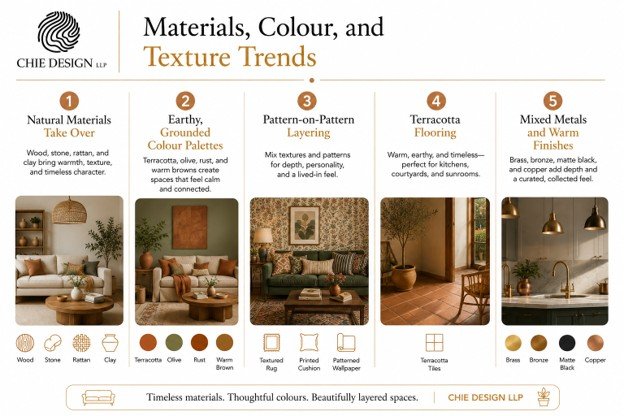
1. Natural Materials Take Over
Wood, stone, rattan, and clay are replacing the glossy, synthetic finishes that dominated the last decade. Homeowners want materials that age with character rather than surfaces that just look new. Expect to see more raw wood grain left visible, unlacquered stone counters, and handwoven textiles in living spaces.
2. Earthy, Grounded Colour Palettes
Terracotta, olive, rust, and warm browns are replacing the cool greys and stark whites that defined the minimalist era. These tones pair well with natural materials and photograph less clinically, which is part of why they’re spreading fast on social platforms too.
3. Pattern-on-Pattern Layering
Mixing complementary patterns, think a textured rug against a printed cushion against a patterned wallpaper, is back after a long stretch of restrained, single-tone rooms. Done well, it adds warmth without tipping into visual chaos.
4. Terracotta Flooring Makes a Comeback
Terracotta tiles are showing up again in kitchens, courtyards, and sunrooms, prized for their warmth underfoot and their ability to anchor a room in earthy tones without needing much else.
5. Mixed Metals and Warm Finishes
Brushed brass, aged bronze, and matte black are being combined rather than matched to a single metal finish throughout a home. This layered approach to hardware and fixtures adds warmth and avoids the slightly sterile look of an all-chrome or all-brass room.
Layout, Personality, and Fixture Trends
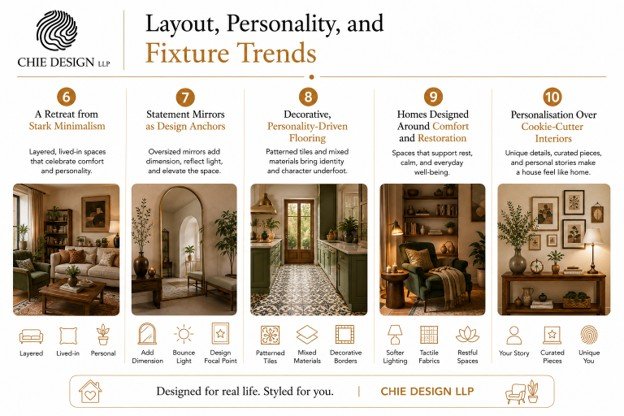
6. A Retreat from Stark Minimalism
Homes are moving toward layered, lived-in spaces rather than the overly curated look that dominated for years. This doesn’t mean clutter, it means rooms built around comfort and personality rather than a showroom aesthetic that nobody actually lives in day to day.
7. Statement Mirrors as Design Anchors
Oversized, sculptural mirrors are being used deliberately to add dimension and bounce light around a room, rather than as an afterthought hung near the door. In a luxury interior designers brief, a well-placed mirror is now doing as much design work as a feature wall.
8. Decorative, Personality-Driven Flooring
Flooring is no longer just a neutral base. Patterned tiles, mixed materials, and decorative borders are being used to give rooms a distinct identity underfoot, particularly in entryways and kitchens.
9. Homes Designed Around Comfort and Restoration
There’s a growing emphasis on rooms that support rest and calm rather than just impressing visitors. Reading nooks, softer lighting, and tactile fabrics are being prioritised over purely decorative flourishes.
10. Personalisation Over Cookie-Cutter Interiors
Trend-driven, one-size-fits-all interiors are losing ground to homes that genuinely reflect the people living in them, family heirlooms mixed with new pieces, regional craft alongside contemporary furniture. A top interior designer in Pune working on a family home in 2026 is far more likely to pull in local craft elements than to default to a generic template.
How These Trends Translate Across Cities
Not every trend lands the same way in every market. A best interior designer in Bangalore working on a tech-industry client’s apartment might lean into pattern-on-pattern layering and warm metals, while a heritage bungalow project elsewhere might prioritise terracotta flooring and natural stone.
| Trend | Works Best In | Investment Level |
| Natural materials | Living rooms, kitchens | Medium to high |
| Earthy colour palettes | Bedrooms, living areas | Low |
| Terracotta flooring | Kitchens, courtyards, sunrooms | Medium |
| Statement mirrors | Entryways, living rooms | Low to medium |
| Pattern layering | Bedrooms, soft furnishings | Low |
| Mixed metal finishes | Kitchens, bathrooms | Medium |
The common thread across all ten trends is warmth. After years of cool, curated minimalism, 2026 is the year homes are allowed to feel like someone actually lives in them. It also helps explain why India’s interior design sector, valued at roughly USD 35.5 billion in 2026 and growing at a 12.87% CAGR, is seeing rising demand for personalised, materials-led projects rather than templated ones.
If you’re planning a renovation this year, it’s worth deciding early which of these trends genuinely suit your home’s architecture rather than chasing all ten at once. A terracotta floor works beautifully in a sunlit kitchen and poorly in a dim, north-facing room, and a good designer will tell you that before you commit. It’s the kind of judgement call Chie Design makes with clients at the very first site visit, well before any material is ordered.
FAQs
What is the biggest interior design trend for 2026?
The shift toward natural materials and earthy colour palettes is the defining trend. Homeowners are moving away from cool, minimalist finishes toward warm woods, stone, and terracotta tones that feel grounded and personal rather than showroom-perfect.
Is minimalism out of style in 2026?
Stark minimalism is fading, but simplicity isn’t gone entirely. The shift is toward layered, comfortable spaces with personality, not toward maximalist clutter. Rooms are becoming warmer and more lived-in rather than starkly bare.
Are patterned interiors coming back in 2026?
Yes. Pattern-on-pattern layering, mixing textured rugs, printed cushions, and patterned wallpaper, is trending after years of single-tone, restrained interiors. The key is choosing complementary patterns rather than clashing ones.
Do these 2026 trends work in smaller homes?
Most do, with adjustments. Earthy palettes, statement mirrors, and mixed metal finishes all scale down well. Heavier trends like terracotta flooring work best in specific rooms like kitchens rather than across an entire small flat.
Should I redesign my home to match every 2026 trend?
No. Pick two or three trends that suit your home’s light, layout, and architecture rather than chasing every one. A designer can help identify which trends will age well in your specific space and which won’t.
Bringing 2026’s Trends Into Real Indian Homes
Chie Design has been tracking exactly this shift toward natural materials and personalised interiors across its residential and commercial projects in Mumbai, Pune, Bangalore, and Goa. The studio blends these emerging trends with the practical realities of Indian homes, humidity, space constraints, and long-term durability, so a 2026 look doesn’t need a refresh again in eighteen months.
Want a 2026-ready interior that still feels timeless in five years? Schedule a consultation with our design team.