
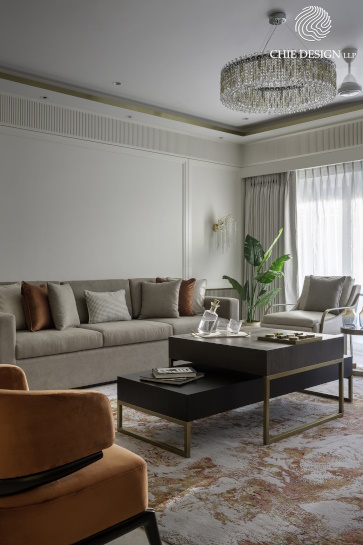
Due to the evolving world of interior design, one of the widespread myths is that you are either going to be charmed by the old or be comfortable with the present. In Chie Design, we trust in what we call The Art of Fusion, a philosophy of utility, functionality, and classic beauty being in harmony.
It is not merely positioning an old chair in a small room to make the home a masterpiece that rewards the tradition, and at the same time embraces the modern way of living. It is a matter of a delicate balance of heritage to inform the soul of the space, and the modern design to drive its functionality. Be it a heritage bungalow restoration in Bangalore or a luxury 4 BHK design in Mumbai, here are a few ways in which you could smoothly blend these two worlds.
Mastering the Art of Fusion: 5 Key Principles for Timeless Design
To create a smooth combination of ancient and modern living, one should not only combine the styles of furniture, but also have a vision of the structure and space, along with a sense of spirit. In our case, Chie Design, the real fusion brings dialogue between the past and the future. These are the five guiding ideals that we uphold to make sure that your space is alive to the traditional beauty and at the same time fully employs the comfort and ease of today’s living.
1. Structural Harmony: Respecting the Shell, Upgrading the Core
The most effective fusion endeavors start with the intense reverence for the architectural heritage. As we do in our project of heritage conservation in Bangalore, it is aimed at maintaining the originality of a building, but making it adaptable to the current residents.
- Conservation: Do not take out the skeleton of the building. Uncovered brick walls, classic arches, or high ceilings are invaluable resources that establish a space as a historic site.
- Modernization: The shell is to be traditional, but the systems should be the most recent. Our systems are designed to be made energy efficient with HVAC, smart lighting controls, and modern plumbing without being visible behind the traditional facades. This makes it so that a home appears to be a classic, yet it functions as a modern machine.
2. Spatial Wisdom: Vastu vs. Open Plans
The modern design is an advocate of open plans so as to promote the flow of air as well as socialization. This is, however, impersonal at times. It is in this area that traditional Indian wisdom, namely Vastu Shastra, is very important.
There is no need to compromise a modern look to adhere to Vastu precepts. Rather, apply them to produce balance, flow, and harmony.
- Zoning: Apply Vastu to define the location of essentials (such as the master bedroom or kitchen) to allow good energy circulation, and apply modern negative space principles to allow the space to remain clean and relaxed.
- The Center: In a similar way to the traditional house where the center courtyard was at the center of the residence, in contemporary large apartments, it is possible to create the central focal point, which the open space can be attached to to have a feeling of seriousness and unity.
3. Material Alchemy: Mixing the Rough with the Smooth
A careful treatment of materials is one of the most efficient forms of integrating eras. As we tend to stress, texture gives character and depth, which is otherwise lacking in flat modern surfaces.
- Contrast is key: Compare the coziness of reclaimed wood or rough-hewn stone with the smoothness of glass, stainless steel, or silver. An example of such a scenario is the heavy, traditional wooden dining table and the modern, lightweight metal chairs.
- Luxury meets Durability: We often use Italian marble because it is classic and beautiful, but implement it in clean edges that are modern. Equally, the plush velvet or silk material, when combined with the rough wood pieces, makes a tactile experience both luxurious and earthly.
4. Light and Nature: Biophilic Relation
The traditional architecture tended to focus on a connection to nature, and this concept is returning with an enormous resurgence as biophilic design.
- Natural Light: Maximum utilization of natural light by big windows and skylights. This saves energy as well as improves the mood and productivity, not only by consuming less electricity, but also by being one of the fundamental principles of our sustainable design approach.
- Greenery: Interiorize the exterior. It could be a vertical garden in a Mumbai apartment or a potted native garden in a Pune office; living plants serve as a still link between the traditional homes of their organic nature and the clean lines of contemporary buildings.
5. Conscious Decor: Upcycling and Traditional Artisanship
True luxury is responsible. A combination of styles is the ideal chance to exercise sustainability, which is one of the main pillars of the ethos of Chie Design.
- Upcycling: But don’t dispose of old furniture, re-use it. The retro products are made to bring out uniqueness. We also support the idea of upcycling old products, like giving an old cabinet a new coat of paint with eco-friendly paint or reupholstering an old sofa with sustainable and eco-friendly material.
- Local Workmanship: Use elaborated wooden furniture or handcrafted pieces created by local artisans. This not only sustains the local economy and lessens transportation emissions, but it also adds your modern space with a story that cannot be matched by mass-produced decor.
Conclusion
The combination of traditional construction and modern functionality is not only a question of aesthetics, but also a question of a space that should be lived in and should be natural. You make it not only a trend, but a refuge, and this is how you do it: you honor the past (with the elements of the heritage and the Vastu) and embrace the future (with the help of the sustainability and intelligent technology).
Have you been longing to combine old-time tradition and new luxury at home? Call Chie Design to begin with.
FAQs
1. Is it possible to use the principles of Vastu Shastra in an open-plan apartment that is purely modern?
Yes. Vastu allows you to create the layout, flow, and color decisions without having to sacrifice a contemporary look.
2. What can I do to make an old-fashioned heritage home energy efficient?
The use of LED lighting, appliances that are energy rated, and sealing windows in order to insulate the building without destroying the original architecture.
3. Is sustainable interior design more costly compared to regular design?
Not necessarily. Such practices as recycling old furniture and using local materials can, on the contrary, be cost-efficient and differentiated.